Cruisers Lab published literature
QIC: Cruiser
Date: 12/15/2025
PAX: Ziggy Stardust (WD), Tonka (WB), Blind Date, Zephyr, Slow Pitch, Cruiser (Q)
Rapid-Onset Upper Extremity Shortening Following Exposure to Unregulated Fitness Stimuli
A Completely Unreviewed Case Series from Village Idiocy (VI)
Authors: Cruiser PT, Stardust Ziggy, Tonka, Pitch Slow, Date Blind, Zephyr
Affiliations: Cruiser’s Laboratory
Funding Disclosures: None (which shows)
Abstract
Background: Recent trends in CDC public health guidance suggest that scientific rigor is optional if confidence is high enough.
Purpose: To evaluate the effects of Cruiser’s Laboratory on a small cohort of F3 participants using a methodology best described as “vibes-based.”
Methods: Six men voluntarily entered the study. No IRB approval was sought. Consent was implied by showing up. Several conclusions were made up during the workout.
Results: All participants experienced acute arm shortening, decision regret, and elevated “bro status.”
Conclusion: Despite a complete lack of scientific integrity, subjects appeared better off than before—though visibly altered.
Introduction
Village Idiocy (VI) has long operated on the fringe of acceptable fitness practices. Cruiser’s Laboratory (CL) was conceived not from evidence-based programming, but from a growing realization that making things up confidently is apparently an acceptable modern research strategy. 1 This session aimed to further investigate those claims. Inspired by recent examples of guidance released without clear data, citations, or accountability, this study sought to answer a simple question: What happens if we just… do stuff… and call it science? CL was designed to explore the limits of endurance, metabolic stress, and personal regret under early-morning and sub freezing conditions. Previous anecdotal evidence suggests that repeated exposure to high-volume exercises with minimal rest while freezing your ass off may result in both physical adaptation and psychological questioning.2
Methods
Study Design
This was a prospective, non-randomized, non-blinded, non-sensical case series conducted outdoors with rocks of inappropriate sizes (yes actual rocks, not the rocks/stones you initially were thinking).
Participants
Six adult males entered the study of their own free will, despite:
- No explanation of risks
- No explanation of benefits
- No explanation at all, really
Ethical Oversight:
This study was conducted without institutional review board (IRB) approval, informed consent, or formal safety monitoring. No safety officer was present, and no predefined stopping rules were established. Participant agreement was assumed based solely on voluntary attendance at the AO, a methodology consistent with prior work from CL and other historically questionable research environments. Ethical concerns were noted but ultimately ignored in favor of completing the experiment. When participants requested relief or modifications (frequent calls to “Omaha”), those requests were not acknowledged, consistent with classic behavioral compliance research (see Discussion).3
Intervention
The Thang:
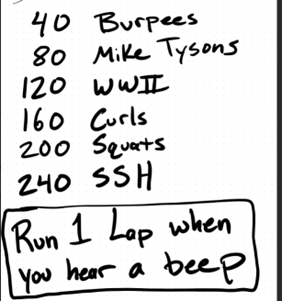
Special notes:
- The beep occurred every 3 minutes on the minute
- Several PAX made objectively terrible rock selections, choosing loads that exceeded both strength capacity and common sense.
- Participants were repeatedly encouraged to “keep going” despite visible distress.
- Rest periods were rumored to exist but never confirmed.
Results
Findings
All participants demonstrated a rapid and irreversible decline in perceived upper extremity length, with onset occurring approximately seven minutes into the intervention. This decline progressed steadily and plateaued at a functional endpoint described by participants as “can no longer scratch nose” (see Fig. 1). No spontaneous recovery was observed during the study period.
Participants selecting larger rocks exhibited earlier onset of muscle failure, increased volume and frequency of verbalizations, and significantly higher self-reported regret scores (see Fig. 2). Additionally, these participants demonstrated prolonged and intense eye contact directed toward the Q when requesting to Omaha. Notably, no statistically meaningful correlation was identified between rock size and learning, adaptation, or future decision-making.
Despite repeated verbal cues from participants indicating distress, fatigue, and questionable life choices, Q responsiveness remained statistically nonexistent throughout the intervention (see Fig. 3). This finding is consistent with prior VI literature and reinforces the established model of authority persistence under perceived scientific justification.2
Key Observations:
- Blind Date: Outlier performance, significantly exceeding group mean; possibly the only subject to complete the protocol on time.
- Zephyr & Slowpitch: High efficiency, low chatter, strong “just get it done” phenotype.
- Ziggy: Stable, unflappable, War Daddy curve—steady progress regardless of chaos.
- Tonka: Demonstrated sprinting behavior inconsistent with recent injury history, suggesting exposure to a non-Cruiser lab.
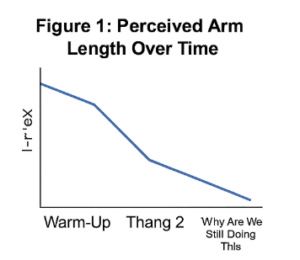
Figure 1. Perceived Arm Length Over Time
Description:
A line graph depicting arm length (Y-axis: “Normal” → “T-Rex”) over time (X-axis: “Warm-Up” → “Why Are We Still Doing This”).
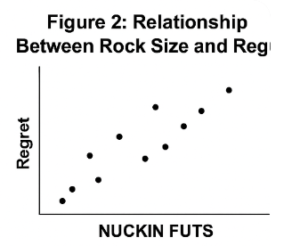
Figure 2. Relationship Between Rock Size and Regret
Description:
Scatter plot showing rock mass (X-axis, labeled “Too Big”) versus regret (Y-axis, labeled “Immediate”).
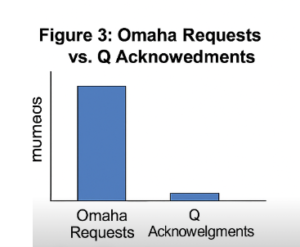
Figure 3. Omaha Requests vs. Q Responsiveness
Description:
Bar graph comparing number of Omaha requests (n = many) to Q acknowledgments (n = 0).
Discussion
Participant behavior closely resembled the classic compliance experiments of the mid-20th century, wherein subjects continued harmful actions after being encouraged by an authority figure wearing confidence and a clipboard.3
Despite audible groaning and repeated appeals for mercy, participants continued suggesting: strong trust in leadership, deeply flawed decision-making or most likely both.
Interestingly, outcomes were overwhelmingly positive from a morale and brotherhood standpoint, reinforcing the VI hypothesis that shared suffering produces growth, even when the science is fake.4
Limitations
- Sample size of six
- No control group
- Data recorded entirely from memory
- Several conclusions were decided before data collection
Conclusions
Despite catastrophic methodology and nonexistent ethics, Cruiser’s Laboratory successfully elevated bro status, reinforced community bonds, and reminded participants why they keep coming back to VI. While temporary arm shortening and questionable decision-making were observed, all subjects exited tougher, closer, and more confident in their ability to survive bad ideas together. Future research is unnecessary, though similar experiments will almost certainly occur.
References
- RFK Jr. All public appearances
- Cruiser, C. Trust Me, This Is Fine. Journal of VI Science. 2025.
- Milgram, S. Please Continue the Experiment.
- “I Saw It on the Internet.” Personal Communication.
COM: Please keep Slow Pitch and his family in your prayers as they grieve the loss of his mom this past week. We are grateful for the way Slow Pitch consistently shows up for this group, and we want to surround him and his family with prayer, support, and encouragement during this season.
Please also lift up Blind Date’s grandmother-in-law, who has an upcoming doctor’s appointment regarding cancer treatment. Prayers for clarity, peace, and good news.
NMM: It is truly an honor to lead this group of men. They show up when it’s hard, push me to be better, and make mornings like these worth it. I wouldn’t want to be anywhere else. Thank you, men.

1 Comment
Tonka
“subjects appeared better off than before—though visibly altered” 😂 This BB had me rolling. Great work and terrible beatdown.
Comments are closed.